The idea of a "smart home" conjures images from science fiction: voice-controlled everything, fridges that order groceries, lights that know your mood. Some of that vision has arrived in functional form; much of it remains either overhyped or impractical for everyday households. After years of rapid expansion in the smart home market, consumers are now faced with an enormous range of products at vastly different price points, many of them promising transformative convenience but delivering modest utility at best.
The key question isn't "is this device smart?" but "does this device make my life meaningfully better?" That distinction filters out a surprising number of products. The market is littered with connected gadgets — smart kettles, Wi-Fi-enabled toothbrushes, app-controlled egg trays — that solve problems nobody actually has. Identifying the devices that deliver real, recurring value requires thinking about how you actually live in your home rather than how you imagine you might live.
Smart Thermostats: The Undisputed Champion
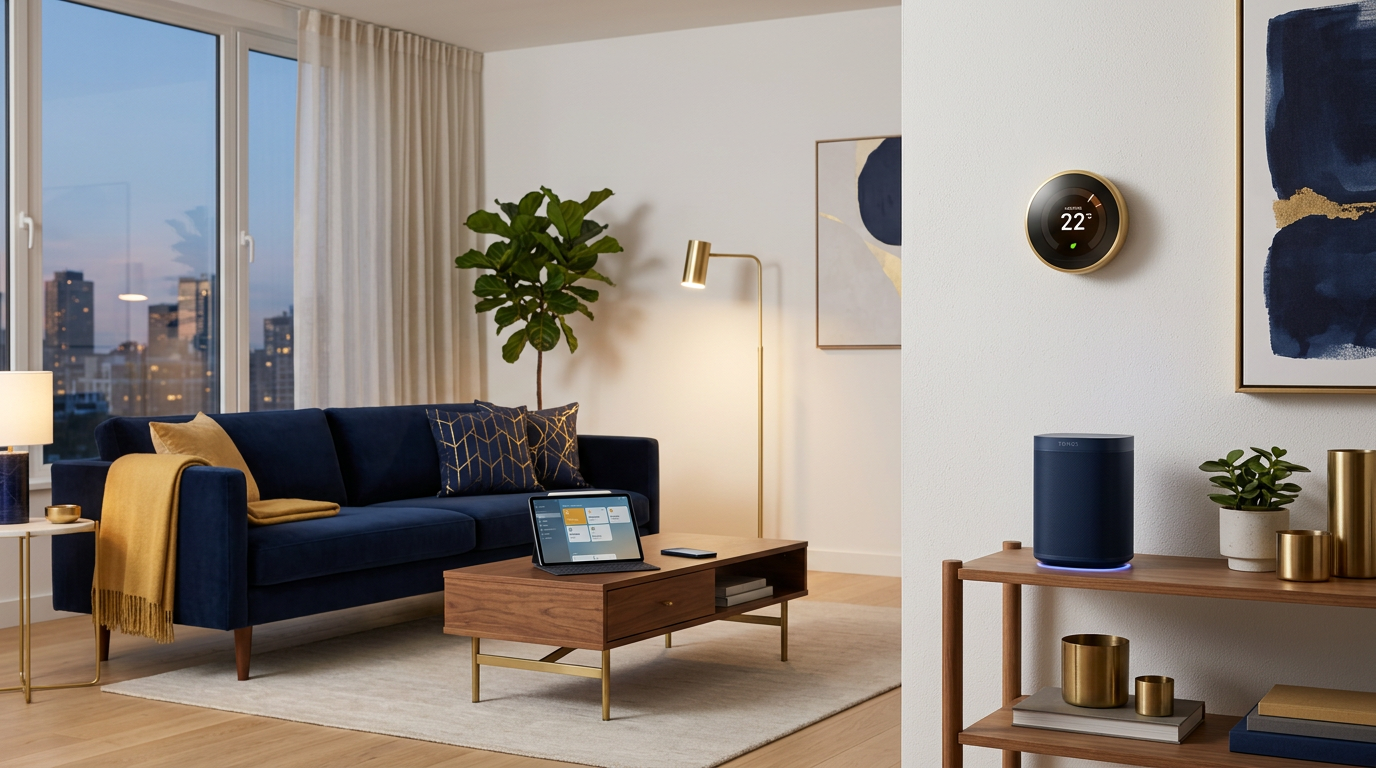
If there is one category of smart home device that consistently delivers a strong return on investment, it is the smart thermostat. Devices like the Google Nest Learning Thermostat, Hive Active Heating, or Tado° Smart Thermostat learn your schedule and temperature preferences over time, adjust automatically when you leave the house, and can be controlled remotely via smartphone. The energy savings they generate — typically 10–20% on heating bills, based on figures cited by device manufacturers; actual savings depend on individual usage patterns and home insulation — can substantially reduce the payback period for the cost of the device and installation.
The practical benefits go beyond savings. Being able to turn on your heating remotely on the way home from work on a cold evening, or to check that you haven't left the heating on while away, are genuine quality-of-life improvements. The integration with voice assistants allows for effortless adjustments without reaching for a phone. For households in the UK where heating is a major annual expense, a smart thermostat is arguably the highest-value smart home purchase available.
Smart Lighting: More Than Just Ambiance
Smart lighting systems — whether the Philips Hue ecosystem, IKEA Tradfri, or cheaper alternatives — are often dismissed as luxury products for people who want to change their living room colours for movie night. That framing undervalues their practical utility. The ability to set schedules that automatically dim lights as your bedtime approaches (which genuinely supports better sleep, given blue light's effect on melatonin production), to ensure all lights are off when you leave without checking every room, or to create presence-simulation lighting when you're away from home for security purposes, are all genuinely useful features.
Motion-triggered smart lighting in hallways, bathrooms, and the kitchen can eliminate dozens of daily interactions with light switches, and in homes with elderly residents or young children, the convenience and safety benefits are particularly significant. The entry-level smart bulbs from IKEA are now inexpensive enough that equipping a whole home no longer requires a premium budget.
Smart Speakers and Displays: The Connected Hub
A smart speaker — whether an Amazon Echo, Google Nest Audio, or Apple HomePod mini — acts as the control hub for a smart home ecosystem. Their voice assistant capabilities vary, but all are competent at setting timers, playing music, checking weather, answering general questions, and controlling compatible smart devices. For many households, they become one of the most-used objects in the kitchen, replacing the ritual of picking up a phone for quick queries while cooking.
The smart display variants (Echo Show, Google Nest Hub) add a visual component that's particularly useful in the kitchen for following recipe videos or for families who want a shared calendar and communication hub. Privacy concerns about always-on microphones are legitimate and worth understanding — most devices have physical mute buttons, and review settings that control audio recording retention are worth visiting periodically.
Smart Doorbells and Security: Genuine Value
Video doorbells — particularly the Ring and Nest Hello range — have proven to be among the most practically useful smart home devices for a broad range of households. The ability to see and speak with whoever is at the door from anywhere, to receive an alert when a parcel is delivered, and to have a video record of activity outside your front door provides both convenience and genuine security value. Insurance providers increasingly recognise video doorbells as a deterrent against opportunistic theft, and some now offer discounts for homes equipped with them.
The subscription model that most video doorbell manufacturers use for cloud storage is worth factoring into the total cost calculation. A Ring doorbell that costs £99 upfront but requires a £35/year subscription for video history is a different proposition than it first appears. Local storage options (where video is saved to an SD card or home server) exist but are more complex to set up. Understanding the ongoing costs before purchase prevents an unpleasant surprise.
Smart Plugs: Low Cost, Surprising Utility
Smart plugs are often overlooked because they seem trivial — they're just a plug with Wi-Fi built in. But their practical utility-to-cost ratio is excellent. For around £10–20 each, a smart plug can turn any dumb appliance into a scheduled or voice-controlled one. The lamp you want to turn on automatically at dusk, the fan heater in the spare bedroom that you want to switch on remotely before a guest arrives, the TV that a sleeping child has left on — all can be managed without leaving the sofa or returning to the room.
Many smart plugs also monitor energy consumption, which can be genuinely illuminating. Discovering that an old appliance you assumed was using negligible power is actually drawing a significant standby load can motivate changes that save real money. Combined with a smart home hub or app, smart plugs are the most affordable building block of home automation.
What to Skip (For Now)
Not every category of smart home device earns its place. Smart fridges that display recipes and allow you to see inside remotely via a camera are expensive, require Wi-Fi to function fully, and are harder to repair when they break — without delivering convenience that significantly exceeds what your current fridge provides. Smart washing machines and dishwashers offer remote start capabilities, but most households find these unnecessary when the machines are already in the home and can be started manually with no material inconvenience.
Fully automated smart blinds and curtains are genuinely useful for accessibility purposes or for large-format windows that are difficult to operate manually. For standard windows, however, the cost (often several hundred pounds per window) relative to the benefit (avoiding pulling a cord) rarely makes sense as an early investment. Better to focus budget on the high-ROI categories first.
The smartest approach to building a smart home is a phased one: start with a smart thermostat and a few smart bulbs, add a smart speaker as a hub, then evaluate what other pain points in your daily routine technology might genuinely address. The goal is not a maximally connected home but a home that works better for the people who live in it.